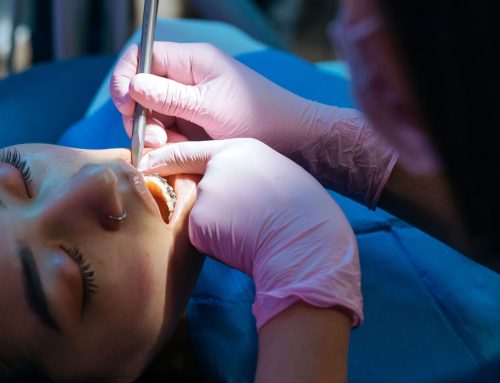
This week we’re taking a closer look at wisdom teeth. What are they? Do we need them and when is it time to take them out?
What are wisdom teeth?
Wisdom teeth are the final set of molars that typically emerge in the far corners of the mouth. Most people have four wisdom teeth, one at the end of each row of your teeth on the top and bottom. Wisdom teeth usually appear during our late teenage years or early twenties. Unlike the other teeth in our mouth they don’t always arrive when expected, they can sometimes take a few years to emerge from the gums and some people don’t have any at all. This uncertainty can cause a bit of confusion for patients, they can also make your mouth feel crowded if and when they do appear. Once your wisdom teeth arrive, this means you have 32 teeth in your mouth and some people simply don’t have enough room for them to come through properly and this can cause issues.
Does everyone have wisdom teeth?
The presence of wisdom teeth varies among individuals. While some are graced with a full set, others may have fewer or even none at all. This discrepancy can be attributed to evolutionary changes and genetic factors influencing jaw size and tooth development.
The question of whether wisdom teeth are evolutionary throwbacks is a topic of debate among scientists and researchers. While some argue that wisdom teeth serve as vestiges of our evolutionary past, others propose alternative explanations for their presence in the human mouth.
One theory suggests that our ancestors had larger jaws and ate a diet that consisted of tougher, more fibrous foods, such as roots, nuts, and raw meat. As a result, they needed an additional set of molars, like wisdom teeth, to aid in chewing and processing these foods. However, as our diets evolved over time to include softer, cooked foods, our jaws became smaller, leading to a mismatch between jaw size and tooth size. This theory posits that wisdom teeth are remnants of our evolutionary history, no longer serving a functional purpose in modern humans.
On the other hand, some researchers argue that wisdom teeth are not necessarily evolutionary throwbacks but rather a product of genetic variation and natural selection. While it’s true that not everyone develops wisdom teeth, they are still prevalent in many populations around the world. In some cases, wisdom teeth may even provide additional chewing surface area and contribute to overall dental function. Whilst the jury may still be out on whether we really need our wisdom teeth or not – it certainly appears that most of us are evolving to do just fine without them!

When do wisdom teeth come through?
Wisdom teeth have a reputation for tardiness, often making their entrance long after the rest of the teeth have settled in. Typically, they start to emerge between the ages of 17 and 25, a period commonly referred to as the “age of wisdom.”
Should I keep my wisdom teeth?
The decision to keep or remove wisdom teeth depends on various factors, including their alignment, potential for causing problems, and your individual oral health. While some people coexist peacefully with their wisdom teeth, others may face complications that necessitate extraction.
What problems might occur with my wisdom teeth?
Whilst wisdom teeth have a bit of a reputation for causing trouble, many people don’t have any issues with them at all. However due to their late arrival and limited space, they may become impacted, partially erupt, or grow in at odd angles. These scenarios can lead to discomfort, inflammation, infection, and even damage to adjacent teeth.
As wisdom teeth are right at the back of the mouth this can also cause issues in later years with decay as they are difficult to reach with toothbrushes and floss.
What is a partially erupted wisdom tooth?
A partially erupted wisdom tooth is one that has only partially emerged through the gum tissue. Unlike fully erupted teeth, which have completely surfaced, partially erupted wisdom teeth may remain partially covered by the gum line, creating a small opening or flap.
Partial eruption can occur for various reasons, including limited space in the jaw, misalignment of the tooth, or obstruction by other teeth or tissue. When a wisdom tooth only partially emerges, it can lead to a host of complications and dental issues.
One of the primary concerns with a partially erupted wisdom tooth is the increased risk of infection. The opening created by the partial eruption provides an entry point for bacteria to accumulate and thrive, leading to inflammation, swelling, and infection of the surrounding gum tissue. This condition is known as pericoronitis and can cause pain, discomfort, and difficulty opening the mouth fully.
A partially erupted wisdom tooth may also be more challenging to clean effectively. The partially exposed surface can trap food particles and bacteria, increasing the risk of decay and gum disease. The presence of a partially erupted wisdom tooth can exert pressure on adjacent teeth, leading to misalignment or crowding.
This is a temporary issue that can be treated by using mouthwashes, special cleaning methods and – in more severe cases – possibly antibiotics. However, if it keeps coming back, then it may be easier to just have that tooth removed.
In some cases, a partially erupted wisdom tooth may become impacted, meaning it is unable to fully emerge due to obstruction by neighbouring teeth or bone. Impacted wisdom teeth can cause further complications, including pain, infection, and damage to adjacent teeth.

What is an impacted wisdom tooth?
An impacted wisdom tooth is a tooth that fails to fully emerge through the gums or becomes trapped beneath the surface of the jawbone. This phenomenon occurs when there is insufficient space in the jaw for the wisdom tooth to erupt properly or when the tooth grows in at an angle that prevents it from emerging correctly.
There are several types of impaction, each classified based on the orientation of the tooth and its relationship to adjacent teeth and bone:
- Mesial Impaction: In this type of impaction, the wisdom tooth grows at an angle toward the front of the mouth, putting pressure on the adjacent tooth.
- Distal Impaction: A distally impacted wisdom tooth grows at an angle towards the back of the mouth, away from the adjacent teeth.
- Vertical Impaction: Vertical impaction occurs when the wisdom tooth attempts to erupt vertically but is obstructed by neighbouring teeth or bone.
- Horizontal Impaction: A horizontally impacted wisdom tooth grows parallel to the jawbone, causing it to be completely trapped beneath the surface.
Impacted wisdom teeth can lead to a range of complications and dental problems, including:
- Pain and discomfort: Impacted wisdom teeth often cause pain and discomfort, especially as they attempt to erupt through the gum tissue. This pain can radiate to nearby teeth and gums.
- Infection: The partial eruption of an impacted wisdom tooth creates a space where bacteria can accumulate, leading to inflammation and infection of the surrounding gum tissue. This condition is known as pericoronitis.
- Damage to adjacent teeth: Impacted wisdom teeth can exert pressure on adjacent teeth, causing misalignment, crowding, and even damage to the roots of neighbouring teeth.
Given the potential risks and complications associated with impacted wisdom teeth, dentists often recommend their removal, particularly if they are causing symptoms or increasing the risk of dental problems.
How can I look after my wisdom teeth?
Proper oral hygiene is crucial for maintaining the health of wisdom teeth. Regular brushing, flossing, and rinsing with mouthwash helps to keep bacteria at bay and prevent issues such as decay and gum disease.
If you’re finding your wisdom teeth difficult to reach with floss, you can buy special long-handled inter-dental brushes that will help you get right into the corners and make sure every tooth is cleaned thoroughly. Ask your dentist for advice if you’re not sure which type of brush to choose.
Attending regular dental check-ups and hygienist appointments enables early detection and intervention if problems arise.
What can I do to relieve pain in my wisdom teeth?
If you’re experiencing discomfort from erupting or impacted wisdom teeth, several remedies can offer relief. Rinsing with warm salt water, applying ice packs to the affected area, and taking over-the-counter pain relievers such as paracetamol are commonly recommended strategies. However, it’s essential to consult with a dentist for personalised advice and treatment options. An antibacterial mouthwash containing chlorhexidine can also reduce the inflammation. These are temporary solutions and if the pain persists then make an appointment to get them checked out.
Why would my dentist decide to take my wisdom teeth out?
Extraction of wisdom teeth may be recommended by a dentist for various reasons. These include impaction, overcrowding, infection, decay or the potential for future complications. You dentist will most likely x-ray the teeth to see what is happening in your mouth and make a decision based on factors specific to your situation.
If it is clear that your wisdom teeth are not going to come through into a useful position due to overcrowding and they are causing recurring pain or discomfort then it is generally easier to take them out.
You may find that your dentist wants to take your wisdom teeth out later in life if they have become decayed. They might not fight to save them as much as your other teeth as they are not thought of as being as necessary as your other molars and most people can shew perfectly well without them.
Removing problematic wisdom teeth can alleviate discomfort, prevent damage to surrounding teeth, and safeguard oral health in the long run.

Wisdom teeth may be late to the party, but they certainly make their presence known! While some people breeze through their emergence without a hitch, others encounter bumps along the road. Understanding the potential challenges associated with wisdom teeth will empower you to make informed decisions about your oral health. When it comes to wisdom teeth, a bit of knowledge (or wisdom) truly is power.